
 All Industries
Transportation asset management for fleets and the roads they run on
Scheduled PM keeps buses and plows in service, condition data keeps bridges and pavement funded, and every inspection is documented before the auditor asks.
Vehicles that make the morning run
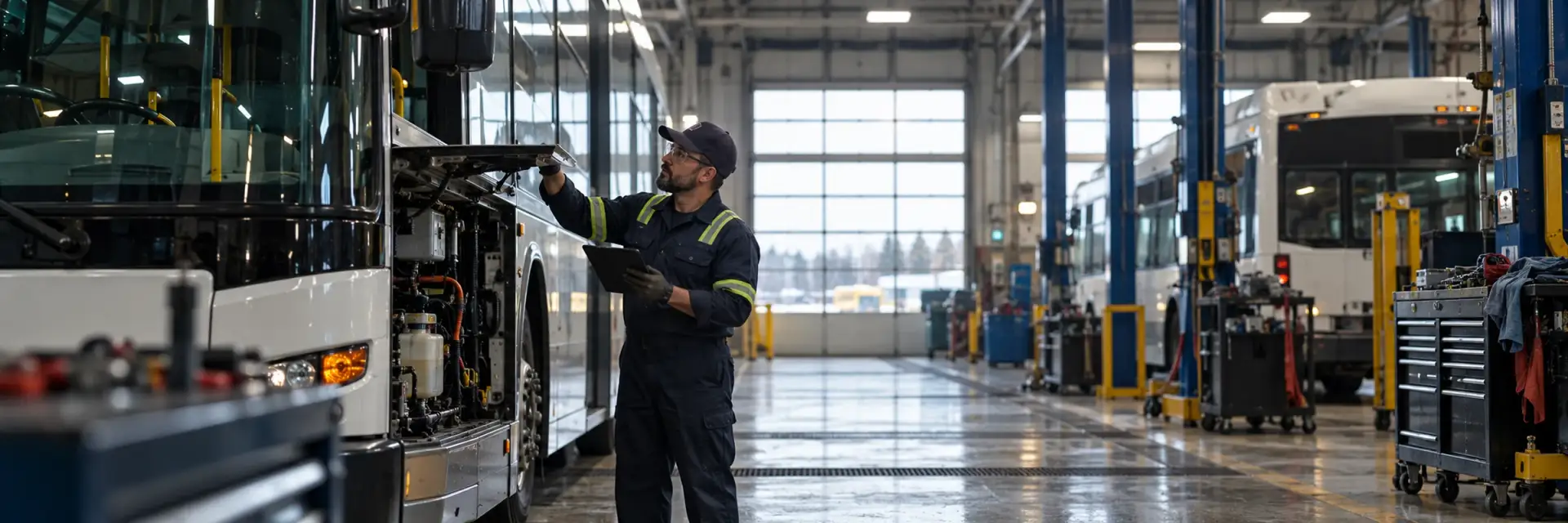
A transit bus costs $500K+ and the service runs whether it's ready or not. Scheduled PM on every unit catches the failing component in the garage overnight - not on the route at 7 AM.
Infrastructure risk you can see
Over 40% of Canadian transportation infrastructure is past its design life. Condition scores on every segment and structure, ranked by consequence of failure, put the next problem on the map before it closes a lane.
Compliance without the binder chase
Bridge inspections, vehicle safety certifications, environmental audits - all of it documented, scheduled, and traceable. When the ministry asks, the answer is a report, not a week of digging.
Catch the breakdown in the garage, not on the route
Every unit gets a PM schedule on the interval its duty demands: monthly safety checks on the buses running 18 hours a day, pre-season service on the plows. Work orders generate themselves when service comes due, so it happens overnight, between runs, on your terms.
- Fixed dates for safety inspections, rolling intervals for service
- Work orders created automatically when service comes due
- Full maintenance and cost history per vehicle
- Repair history shows which units keep coming back to the shop
The road network, on the map and in the plan
Model roads, bridges, and culverts as segments and nodes on a fast vector-tile map. PCI surveys stream in through update-mode GIS imports, the map paints by projected replacement year, and each network's average condition and condition distribution turn hundreds of lane-kilometres into figures council understands.
- Segments and nodes on a fast vector-tile map
- PCI survey results imported in bulk via GIS
- Map painted by condition or replacement year
- Average condition per network to defend the roads budget
Every inspection on schedule, every finding tracked
Bridge inspections, vehicle safety certifications, environmental audits - transit and public works run on documented compliance. Recurring schedules surface what's due before it lapses, and every deficiency becomes a work order with photos, dates, and a closeout trail.
- Recurring inspection schedules with reminders
- Certificates and reports attached to the asset
- Deficiencies convert to tracked work orders
- Audit trails for federal and provincial reviews
And everything else you'd expect
Fleet PM schedules
Fixed or rolling intervals for every unit
Infrastructure module
Road networks as segments on the map
PCI & network condition
Survey imports update condition in bulk
Inspection scheduling
Bridges, structures, and vehicle certs
Risk-based prioritization
Condition × consequence of failure
20-year forecasting
Fleet and infrastructure replacement plans
Work order management
Defect to closeout with full history
Parts inventory
Stock for the garage and the yard
KPI exports
PM compliance and costs to Excel or CSV
“Having visual metrics on asset age and maintenance history in one place has changed how I think about long-term planning. I can see at a glance which assets are aging, what work has been done on them, and how that factors into our capital planning.”
Transportation Asset Management FAQ
Common questions about fleet maintenance, road networks, inspections, and replacement planning.